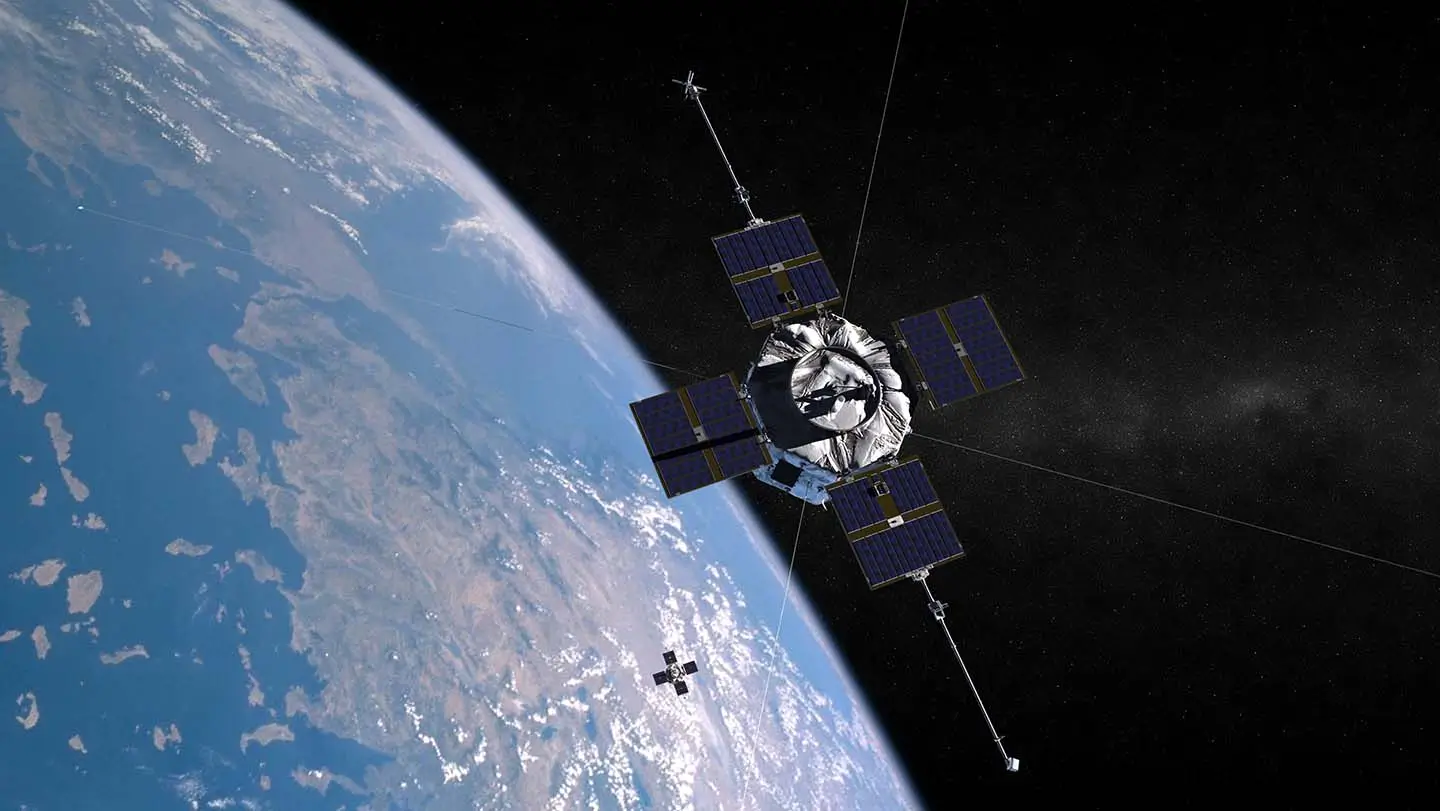
A NASA spacecraft is returning to Earth.
Nearly 14 years after launch, the satellite known as Van Allen Probe A is expected to re-enter the planet’s atmosphere Tuesday evening, according to officials at NASA.
The timing is narrow.
Engineers estimate the spacecraft will descend at about 11:45 p.m. GMT, or 7:45 p.m. Eastern time, though its precise landing path remains uncertain as it falls through the upper atmosphere.
The probe weighs about 600 kilograms.
That mass sounds large, yet the statistical risk to people on the ground remains small. NASA places the chance of injury at roughly one in 4,200 — about 0.02 percent.
Then came the agency’s warning.
“Nasa expects most of the spacecraft to burn up,” officials said Monday, noting that the vehicle will disintegrate as it “travels through the atmosphere.” Still, engineers expect “some components” could survive the violent descent.
Officials emphasized the broader assessment.
“The risk of harm coming to anyone on Earth is low,” the agency said, adding that NASA and the U.S. Space Force will continue to monitor the spacecraft’s trajectory and update predictions as the re-entry approaches.
Astronomers see little cause for alarm.
For most observers, retired astrophysicist Jonathan McDowell said the event could appear as a streak of light across the sky — if conditions align.
Youmight also like




“For the average person,” McDowell told The New York Times, it may simply be “a nice light in the sky,” adding that people should “don’t worry about it.”
He placed the event in context.
“We have much more scary re-entries,” McDowell said, pointing to cases when heavy rocket hardware falls uncontrolled from orbit. A “20-ton Chinese rocket stage,” he said, would concern him far more.
The satellite itself has a long scientific history.
Van Allen Probe A launched in August 2012 alongside its twin, Van Allen Probe B. Their destination: the intense radiation regions encircling Earth known as the Van Allen radiation belts.
Those belts were first identified by physicist James Van Allen.
Most satellites avoid them. The radiation can degrade electronics and shorten mission life. Yet scientists wanted direct measurements from inside the belts to understand how space weather behaves.
The mission outlived its original design.
NASA planned a two-year operation. Instead, the probes collected data for seven years before retiring in 2019.
The research proved influential.
Measurements from the spacecraft improved models that forecast space weather and track how solar activity affects satellites, astronauts, and even electrical grids on Earth.
One spacecraft remains aloft.
NASA expects Van Allen Probe B to remain in orbit for several more years, with re-entry projected sometime after 2030.
Space debris rarely reaches people.
But it has happened before. In 2002, a six-year-old boy in northern China was struck by a 10-kilogram fragment from a satellite launch. Reports said he suffered minor injuries to his toe and head.